ParcelVision
Your First Season on New Hunting Land: A Boundary Checklist
New ground is the best part of hunting and the easiest place to make a boundary mistake. You don't know where the corners are yet, you don't know which trails the neighbors use, and the fence you're relying on may not be on the line at all. The first season sets the pattern, so get the boundary right before you hang anything.
1. Confirm Exactly What You're Hunting
- Bought it? Your deed and closing documents list the parcel numbers and acreage. Match them to the county parcel map.
- Leased it? Get parcel numbers and the exclusions in writing. See our guide to hunting lease boundaries.
- Got permission? Ask the owner to show you the boundary on a map, and which parts are off limits.
2. Walk the Whole Boundary Once
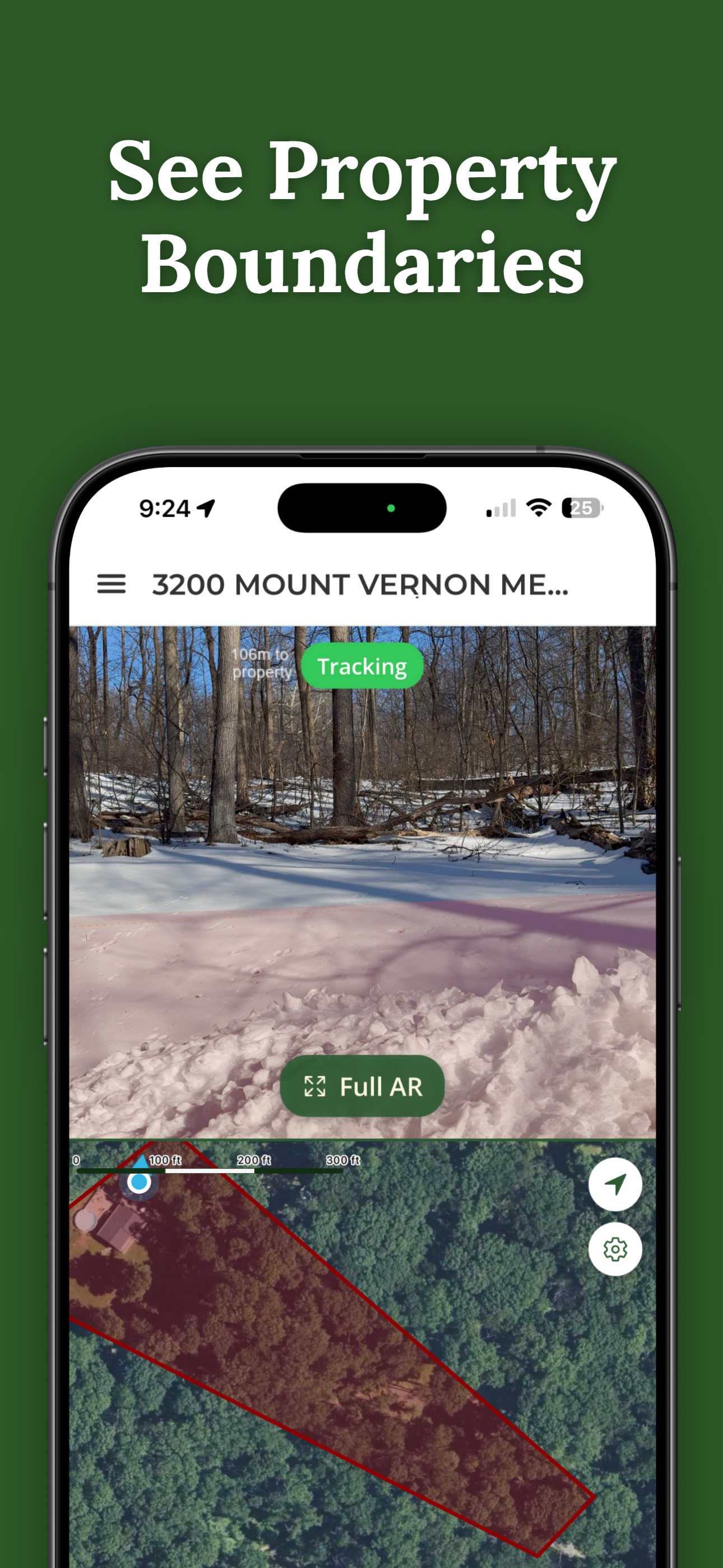
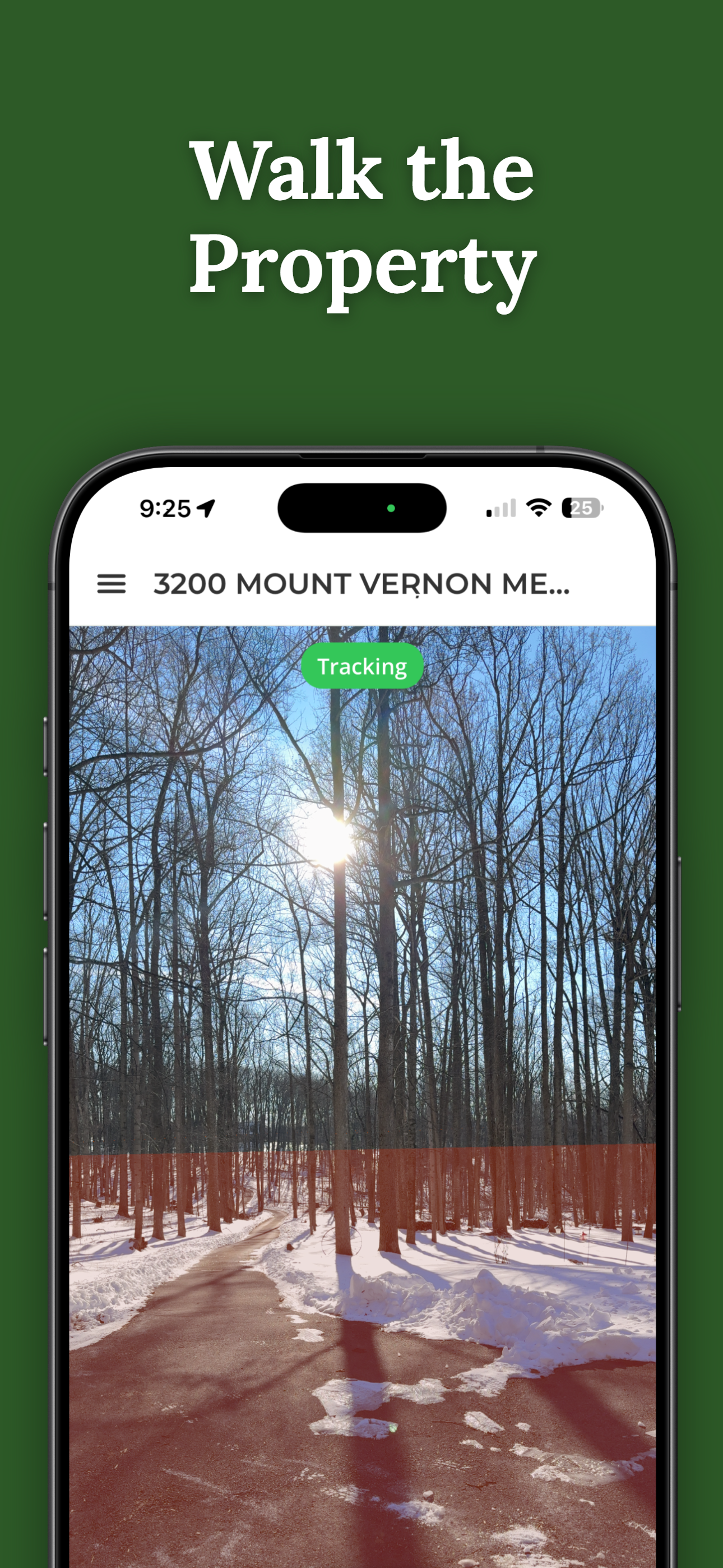
Do the full loop in daylight, before the season, not in pieces while hunting. ParcelVision draws the recorded line on the ground through your phone camera, so you can follow it through timber and across fields and see where it leaves the fence. Note the places where the fence, the tree line or the old two-track wanders off the line. Those are where you'd otherwise drift over.
3. Find the Corners and Markers
Survey pins, painted trees, blazes, rock piles and old corner posts confirm what you're seeing. If you just bought the land and had a survey done, the surveyor's pins are your best reference. Our guide to finding property pins and markers covers what to look for.
4. Check Easements and Rights of Way
Someone else may have a legal right to cross your ground: a utility, a neighbor's driveway, a logging road. An easement doesn't let them hunt, but it does mean people and vehicles may pass through, which matters for stand placement and safety. Your title documents list recorded easements; our explainer on what an easement is covers the rest.
5. Learn Your State's Posting Rules
If you want to keep others out, many states require posted signs at set intervals, and some allow purple paint marks on trees instead of signs. The rules differ by state. Check your state wildlife agency before you buy signs or paint. If you're the one hunting by permission, learn what posted land looks like where you hunt so you recognize it on the neighbors' side.
6. Mark Stands, Access and the No-Go Zones
- Pick stand sites with the property line behind you, not in front. Hanging a tree stand near a property line walks through it.
- With Pro Tools, drop waypoints for stands, parking and gates, and turn on boundary alerts for walking in and out in the dark.
- Flag safety zones around houses and barns, yours and the neighbors'.
7. Meet the Neighbors
Introduce yourself before the season. Ask where they hunt, agree on recovering deer that cross the line both ways, and swap phone numbers. Show them the line on your phone if a corner is unclear. Most boundary trouble in hunting comes from people who never talked.
Learn Your New Ground Before Opening Day
Search the property free, unlock it once for $14.99, and walk the full boundary with the line on the ground in front of you. Share it with everyone who hunts it, free.
Search Your Property FreeFree to download and search. One-time $14.99 per property. No subscription.
This article is for informational purposes only and isn't legal advice. Hunting, trespass, posting and safety-zone rules vary by state and municipality and change over time; check your state wildlife agency and local ordinances. Competitor prices are as published by each company in October 2026. ParcelVision is a visualization aid, not a legal survey.