ParcelVision
Can You Track a Deer Onto Private Property?
It's the situation every deer hunter dreads: a good hit, a solid blood trail, and the trail crosses the neighbor's line. Ethics say you owe that animal your best effort to recover it. The law says the neighbor's land is still the neighbor's land. What now?
Here's what the law generally says, what actually works, and how to keep the whole situation from happening in the first place.
The General Rule: A Wounded Deer Doesn't Open the Gate
In most states, hitting an animal does not give you a legal right to enter someone else's property to recover it. Crossing the line without permission is trespass — the blood trail doesn't change that, and in many states following it while carrying your weapon makes it worse. Game wardens hear "I was just tracking my deer" constantly; it is not a defense in most places.
A minority of states have specific game-retrieval provisions — some allow unarmed retrieval in limited circumstances, others formalize a process that goes through the landowner or a warden. The details vary enough that you should know your own state's rule before the season, not learn it at the line. Your state wildlife agency's regulations are the authority.
The Right Sequence at the Line
- Stop at the boundary. Mark the last blood you found on your side with a waypoint or flagging so you can hand the trail off precisely.
- Contact the landowner and ask. This works far more often than hunters expect — most landowners say yes to a polite, unarmed retrieval request. County parcel records tell you whose land it is; here's how to look up an owner.
- Can't reach them? Call your game warden. Wardens deal with this weekly in season. In many states they can contact the landowner, accompany a retrieval, or tell you exactly what your state allows.
- Take the outcome. If the answer is no, it's no. A lost deer is a bad day; a trespass citation, a license suspension, and a ruined relationship with a neighboring landowner is a bad year.
Better: Make the Call Before the Shot
The retrieval problem is mostly a shot-selection problem. If you're hunting near a line, know exactly where it is and factor it in: a deer standing 40 yards from a boundary it can cross in seconds is a different decision than one standing in the middle of the property.
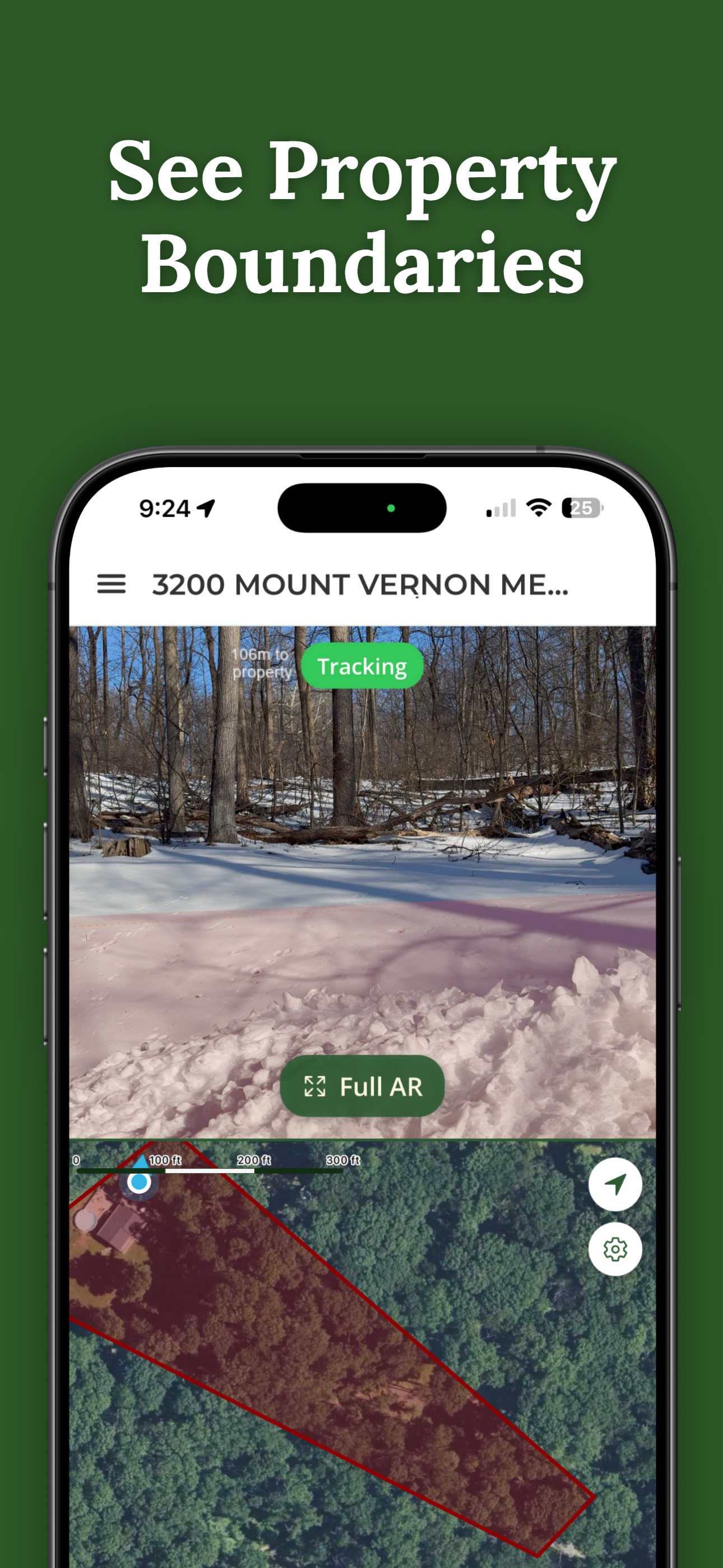
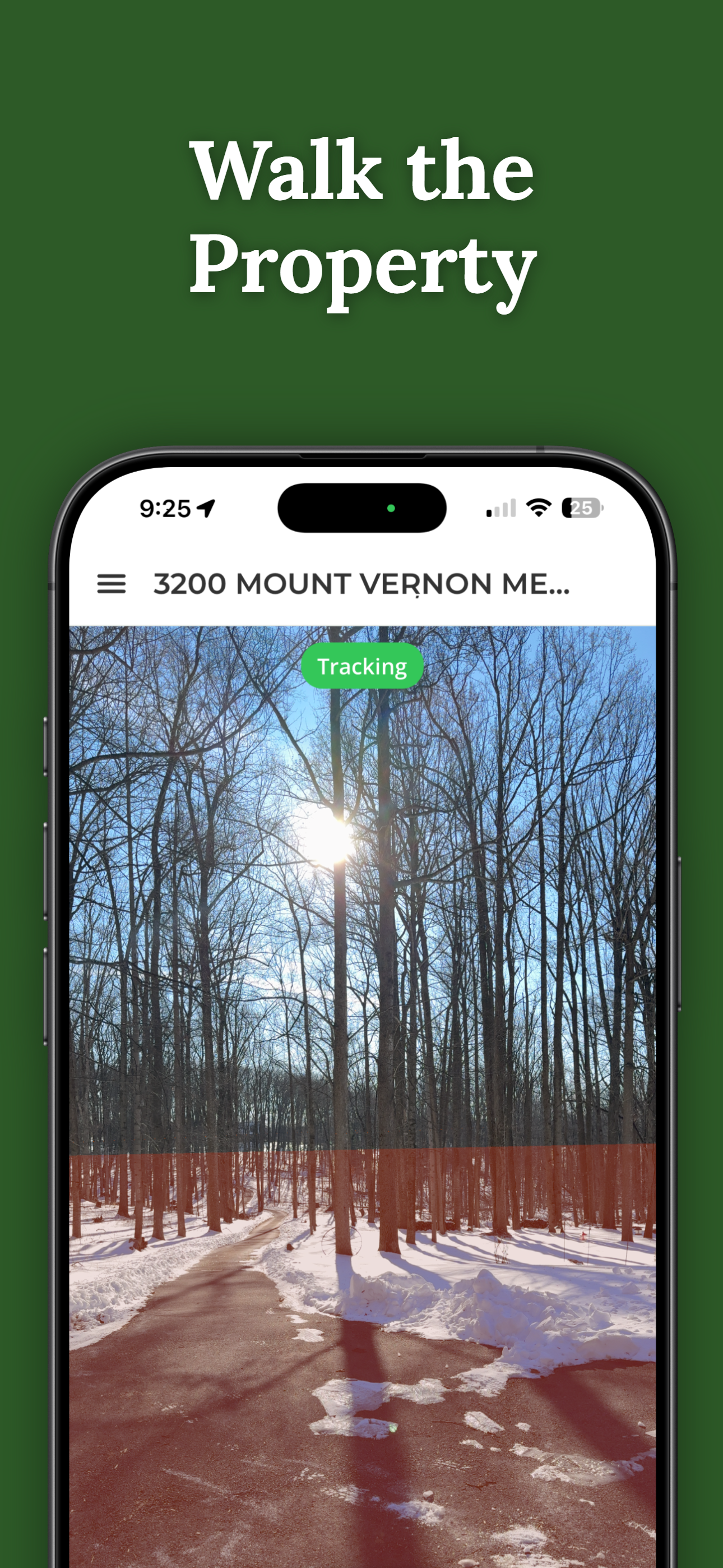
This is where knowing the line precisely earns its keep. ParcelVision draws the recorded boundary on the ground through your camera with a live distance readout, and Pro boundary alerts warn you when you're working close to a line. Knowing you're 60 yards from the neighbor changes the shots you take — and the introduction you make in the off-season ("I hunt the parcel next to yours; if I ever wound one onto your side, could I come ask?") solves the whole problem before it exists.
If the Deer Dies on the Neighbor's Side
Ownership of downed game varies by state, but as a practical matter the landowner controls access, and a warden resolves disputes. Document your hit site and trail on your side, be straight with everyone involved, and let the warden be the referee if it comes to that. Honesty is also what keeps the next request from that landowner from being an automatic no.
Know Exactly How Far the Line Is
ParcelVision shows the boundary on the ground in your camera view with a live distance readout — so near a line, you know it before the shot, not after the trail crosses. Searching any address is free.
Download ParcelVisionFree to download and search. See your first boundary on the ground for $14.99.
This article is for informational purposes only and isn't legal advice. Game-retrieval and trespass laws vary significantly by state and change over time — check your state wildlife agency's current regulations and consult a warden for your situation. ParcelVision is a visualization aid built on county records and GPS, not a legal survey.